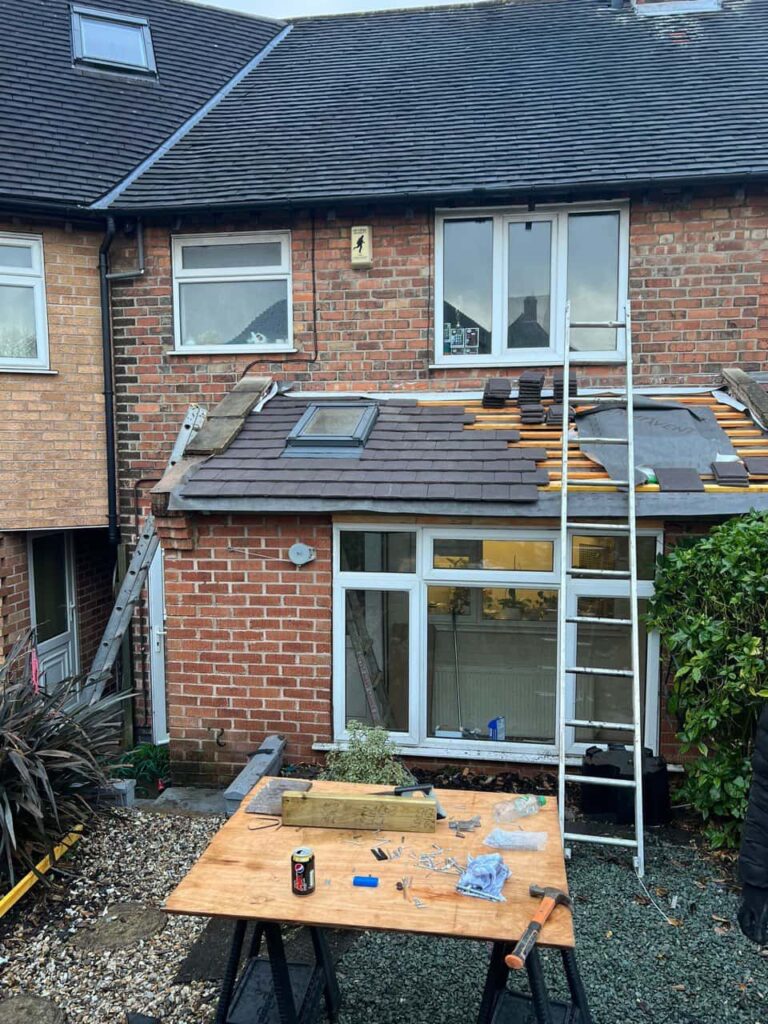
Some roofing defects can be assessed and repaired through a planned appointment. Others require immediate attention because they are allowing substantial water ingress, creating an unsafe condition or leaving the property exposed to further damage.
The difficulty is that roof problems are not always visible from ground level. A single missing tile may expose underlay, while an internal drip could be the end result of water travelling through several parts of the roof. Understanding the warning signs can help property owners in Burton Joyce, Nottingham, decide when an emergency roof repair is necessary.
How to Recognise a Roofing Emergency
A roof problem becomes an emergency when delaying action is likely to place people, the building or its contents at further risk. The type of damage matters, but current weather conditions, the location of the defect and the amount of water entering the property are equally important.
Heavy or Uncontrolled Water Ingress
A steady stream of water entering through a ceiling requires urgent attention. Water can spread through insulation, roof timbers and internal finishes, so the visible leak may represent only part of the affected area.
Emergency work may be needed to control the entry point and prevent further rainfall from entering. Once the immediate situation is stable, the roof can be examined more thoroughly and a permanent repair planned.
Roof Coverings Torn Away by Strong Winds
Severe weather can dislodge tiles, slates, ridge materials or sections of a flat roof covering. Where a large area has been removed or lifted, the underlying roof may have little protection against further rain.
Even if water has not yet appeared indoors, substantial exposed damage should be treated as urgent. Wind can also continue to move loosened materials, increasing the size of the affected section.
Loose Materials That Could Fall
Tiles, slates, flashing and ridge sections can become hazardous when they are only partially attached. Damage above entrances, paths, driveways or occupied areas is particularly concerning.
People should be kept away from the space below until the roof has been made secure. Attempting to remove loose materials without suitable equipment can create additional danger and may disturb otherwise stable parts of the roof.
Bulging or Sagging Ceilings
A ceiling that begins to bow may have water collecting above it. The added weight can cause plasterboard or other materials to fail suddenly.
The affected room should be kept clear, and professional assistance should be requested promptly. A roofer can investigate how water is entering, although internal materials may also need to be checked once the leak has been controlled.
Structural Movement or Partial Collapse
Visible sagging in the roofline, displaced timbers or a collapsed section of roof requires an emergency response. Structural movement can affect a wider area than the damage visible from inside or at ground level.
Avoid entering any space beneath an unstable section. The immediate priority is to assess the condition safely and prevent further movement before permanent remedial work begins.
Serious Damage Around a Chimney
Chimneys contain several potential points of weakness, including flashing, mortar joints and the junction with the main roof. A chimney that has become visibly unstable or has shed masonry may present an immediate risk.
Urgent attention may also be needed where displaced flashing is allowing substantial water ingress. Because water can run beneath tiles before appearing indoors, the surrounding roof area should be included in the assessment.
Sudden Failure of a Flat Roof
Flat roofs may require emergency repair when the covering tears, a seam opens or a large blister splits. Water can collect around these defects and enter the roof build-up rapidly.
Blocked outlets can make the situation worse by allowing standing water to deepen. The repair should therefore consider both the damaged covering and the drainage system rather than treating them as unrelated issues.
When a Repair Is Important but Not an Emergency
A stable defect that is not allowing active water ingress may not require an emergency visit. Examples can include a small area of weathering, a minor crack identified during an inspection or limited mortar deterioration in dry conditions.
These faults should still be addressed within a reasonable period. Roofing problems rarely improve on their own, and exposure to further wind or rain can turn a manageable repair into an urgent one.
What to Do Until Help Arrives
If roof damage creates an immediate risk, take simple precautions without placing yourself in danger:
- Keep people away from unstable areas
- Move possessions away from water where safe
- Use containers to collect minor drips
- Avoid touching wet electrical fittings
- Do not climb onto the roof
- Observe the problem from ground level only
Information about when the damage occurred, where water is appearing and how quickly it is spreading can help the roofer understand the likely severity.
The Difference Between Temporary and Permanent Repairs
Emergency work is sometimes intended to stabilise the roof until conditions allow a complete repair. This may involve securing loose materials or temporarily protecting an exposed section.
A follow-up inspection remains important. The permanent repair should address the cause of the failure, assess the surrounding roof materials and confirm whether moisture has reached concealed areas.
Why Professional Assessment Matters
The position of an internal leak does not always reveal where the roof has failed. Water may enter around a tile, chimney, flashing detail or roof junction before travelling some distance beneath the covering.
Professional roofers can inspect the complete affected area, identify contributing defects and determine whether an emergency measure or immediate permanent repair is most appropriate.
Conclusion
Roof damage requires an emergency repair when it involves uncontrolled water ingress, unstable materials, exposed roof construction, a sagging ceiling or signs of structural movement. Prompt action can stabilise the property and limit the spread of damage.
Burton Joyce Roofing Repairs provides professional roof assessments and emergency repair services in Burton Joyce, Nottingham. If your roof has suffered sudden or serious damage, contact the team to arrange an inspection and establish the safest next step.
Call us on: 0115 647 1193
Click here to find out more about Burton Joyce Roofing Repairs
Click here to complete our contact form and see how we can help with your roofing needs.